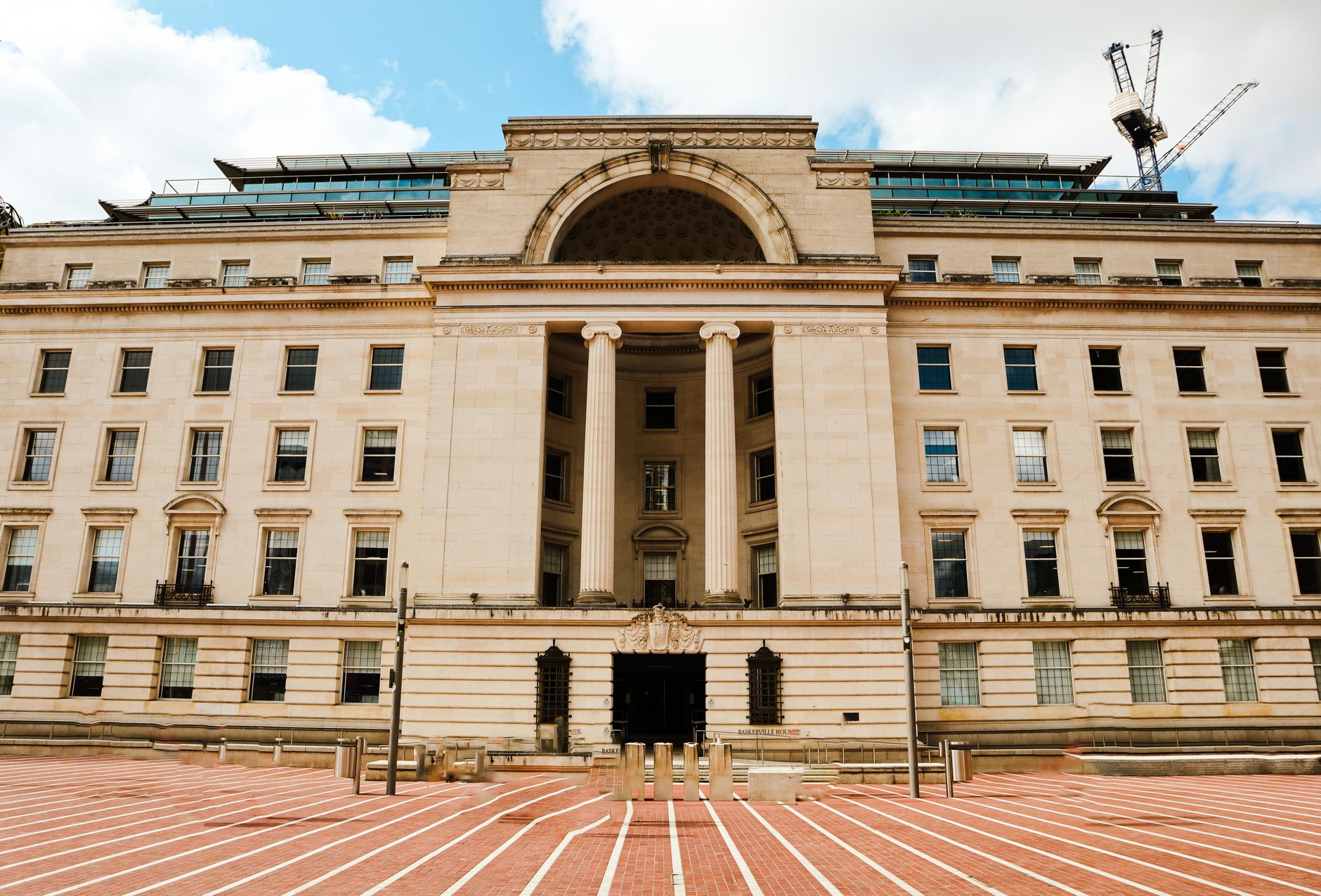
University at a Glance: Who Is the University of Birmingham
The University of Birmingham was granted its royal charter in 1900, making it the UK’s first “red brick” university and a founding member of the Russell Group. The campus sits in Birmingham, in the English Midlands, and currently enrols around 38,000 students, more than 30% of them international. Notable alumni include geologist Li Siguang and former British Prime Minister Neville Chamberlain. According to the latest published rankings, the university holds a stable position inside the global top 100, performing consistently in the 2027 QS World University Rankings, with several subjects ranked in the UK top ten.
For Chinese applicants, Birmingham is one of the Russell Group institutions most receptive to Chinese academic backgrounds, with a notably transparent admissions policy. The university runs a dedicated international admissions team and publishes clear qualification-equivalence benchmarks for Chinese students.
Undergraduate Admissions: What Chinese Students Need
Undergraduate applications to the University of Birmingham are submitted exclusively through UCAS; direct applications to the university are not accepted. For 2026 entry, the standard UCAS deadline is 29 January, with Oxford, Cambridge and medicine courses closing earlier.
Academic requirements: There are three main routes for Chinese students. First, application with the gaokao: the total score must reach 80% or more of the provincial full marks, and there is also a high-school average requirement — typically an average of 85% or above across the final two years (senior years 2 and 3). Second, completion of a recognised university foundation programme to the required grades. Third, international qualifications such as A-Level or IB, with requirements varying by programme: most courses ask for A-Level grades between AAA and ABB, while IB totals typically fall between 32 and 36 points.
English language requirements: Undergraduate IELTS requirements fall into four bands. Most science and engineering and social science programmes require an overall IELTS score of 6.0 with no component below 5.5; business, education and similar programmes mostly require 6.5 overall with no component below 6.0; law, history and other humanities subjects may require 7.0 overall with no component below 6.5. The university also accepts alternatives such as TOEFL and PTE Academic.
Application checklist: Materials submitted through UCAS include a personal statement, at least one reference letter, and full academic history with transcripts. Some programmes — music and drama, for example — require a portfolio or interview, while medicine and dentistry require the UCAT or BMAT admissions tests.
Postgraduate Admissions: Degree and Grade Standards
Postgraduate applications are submitted directly through the University of Birmingham’s online application system. Most taught master’s courses have no fixed deadline and admit on a rolling basis, but for popular programmes it is advisable to apply before March of the relevant year.
Recognition of Chinese qualifications: Birmingham classifies Chinese institutions into different tiers, drawing primarily on the Netbig ranking or the ShanghaiRanking of Chinese universities. Applicants from 985 or 211 universities are normally required to hold a bachelor’s average of 80% or above; graduates of non-985/211 institutions are generally asked for an average of 85% or above. Some highly competitive business school courses may apply stricter screening on institutional background.
English language requirements: Postgraduate language requirements mirror the undergraduate bands. Most business, engineering and computer science programmes require an overall IELTS score of 6.5 with no component below 6.0; law, English literature and international relations may require 7.0 overall with no component below 6.5.
Application materials: Postgraduate applications typically require undergraduate transcripts, degree certificate or certificate of enrolment, a personal statement, and two reference letters. Business applicants may be asked for GMAT or GRE scores — not mandatory, but a strong score strengthens the application. Some programmes require a research proposal or writing sample.
Tuition and Cost of Living Reference
Tuition rates for the 2025-2026 academic year have been published; 2026 entry fees usually rise slightly. The ranges below are for reference.
Undergraduate tuition varies by subject area. Arts and social sciences cost roughly £22,000–25,000 per year, science, engineering and technology about £26,000–30,000, and clinical medicine programmes are more expensive. Taught master’s fees are similarly tiered: business master’s around £28,000–32,000, STEM master’s £26,000–30,000, and arts master’s £22,000–26,000.
On living costs, UK visa rules require students in Birmingham to demonstrate at least £1,023 per month; over nine months that comes to roughly £9,207 a year. Actual outgoings vary with personal spending habits, with accommodation, food and transport the main items.
Scholarship Opportunities: What Chinese Students Can Apply For
The University of Birmingham offers international students a range of scholarships, most of which require a separate application and are competitive.
At undergraduate level, the main awards include the Global Undergraduate Scholarship, typically worth between £1,500 and £5,000, awarded on academic merit, and the Chancellor’s Scholarship, which recognises particularly outstanding applicants and covers part of the tuition fee. At postgraduate level there is the Global Masters Scholarship, ranging from £2,000 to £10,000, and most colleges also run their own faculty scholarships.
Chinese students can also look at the UK’s Chevening Scholarships and the joint funding programmes between the China Scholarship Council (CSC) and the University of Birmingham, the latter mainly for doctoral researchers. Exact scholarship amounts, application deadlines and eligibility always follow the figures published on the university’s official website for the relevant year.
Application Timeline Advice
For students planning 2026 autumn entry, a sensible preparation rhythm looks like this:
Undergraduate applicants should complete UCAS registration and start drafting their personal statement by September of the previous year; October to January is the submission window, with 29 January the deadline for most courses. Offers are typically issued between March and May, and visa and accommodation arrangements run from June to August.
Postgraduate applicants can submit between October of the previous year and March of the entry year, with popular courses best submitted early. Offer decisions usually take 4 to 8 weeks. After receiving a conditional offer, you must meet the conditions within the specified time and pay the deposit to confirm your place.
Visa applications can be submitted within three months before the course starts, and processing typically takes around 3 weeks. Birmingham issues a CAS (Confirmation of Acceptance for Studies) to confirmed students, which is a required document for the student visa application.
Data in this article verified July 2025. Tuition, rankings and admissions policies may change — always check the University of Birmingham’s official website for the latest information before applying.